

Victorian Postcards: Everyday Mail turned Treasured Keepsakes
In the late 19th century, a small but powerful piece of printed paper captured hearts across Europe and America: the postcard. What began as a simple, functional way to send quick messages soon transformed into a beloved and beautiful form of correspondence. For Victorians, postcards weren’t just mail—they were tiny works of art, sentimental tokens, and cherished collectibles.
Today, vintage postcards are treasured by collectors, crafters, and history lovers alike. But what made Victorian postcards so special, and how did printing technology play a role in turning them into keepsakes?
Let’s dive into the colorful history of Victorian postcard printing and why these little cards still charm us today.
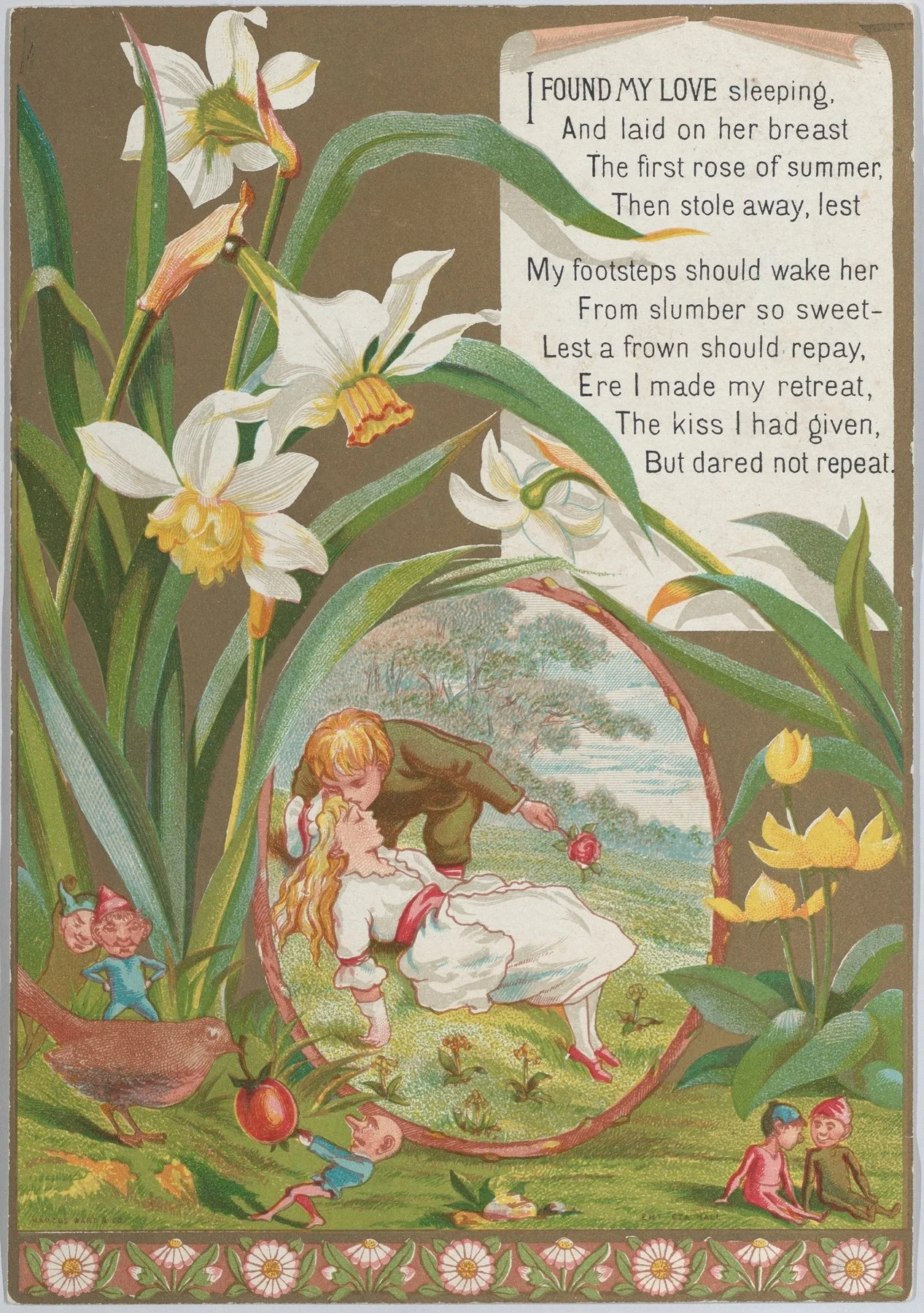
Valentine (1874)
Kate Greenaway (English, 1846 – 1901)
A charming work of art with a poem in the upper right hand corner of the illustration. Daffodils, fairies (little people), bird, and a boy and girl framed in a circle in the middle of the work of art.
The Birth of the Postcard
The earliest postcards appeared in the 1860s as plain, government-issued cards used for short messages. They were simple and functional—no images, no flourishes. But it wasn’t long before designers and printers saw an opportunity to elevate these utilitarian cards into something more.
By the 1870s and 1880s, decorative postcards began to appear, often featuring:
Floral arrangements
Children and cherubs
Holiday greetings (especially Christmas, Valentine’s, and Easter)
Landmarks and city views
Sentimental sayings and poetry
These early decorative postcards were the beginning of a worldwide craze.
Chromolithography: Printing in Full Color
One of the most important technological advances that fueled the popularity of Victorian postcards was chromolithography—a revolutionary printing method that allowed for rich, vibrant, full-color images.
Unlike earlier printing techniques that relied on hand-tinting or black ink, chromolithographs used multiple stones or plates, each inked in a different color, to build up complex images. The result? Postcards that looked more like paintings than print.
💡 Fun Fact: Chromolithography also made the famous “Victorian scraps” so collectible—postcards and scraps were often printed by the same companies and featured similar motifs.
Postcards as Personal and Emotional Artifacts
Victorians were famously sentimental. In an era without text messages or phone calls, sending a postcard was a way to:
Express affection
Share poetry or scripture
Celebrate holidays or milestones
Send a romantic or flirtatious note
Show that you were thinking of someone
Many postcards were saved in albums or decorative boxes, never intended to be thrown away. A beautifully printed card with a thoughtful message could become a memory object—a snapshot of a relationship or a moment in time.
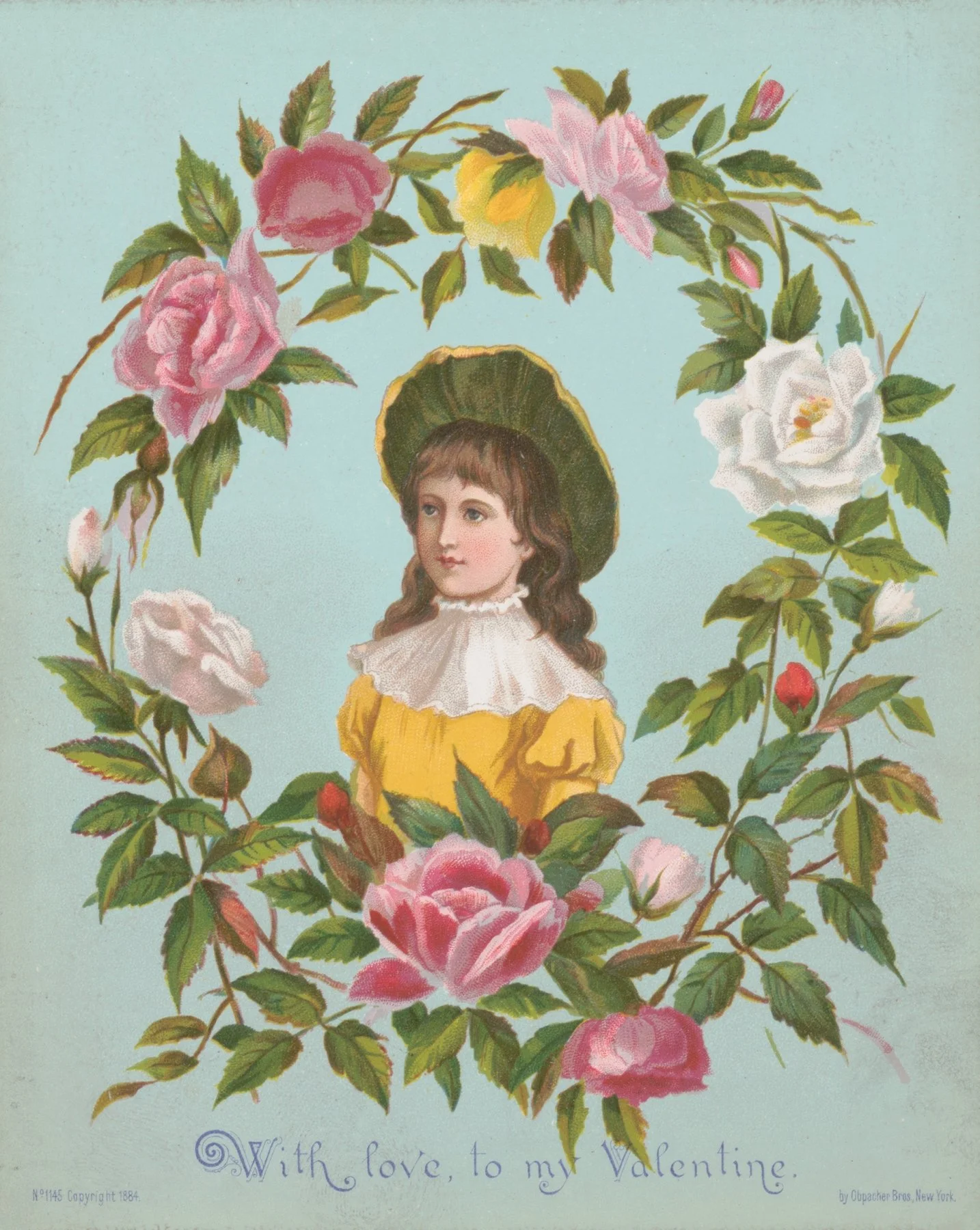
Victorian Valentine Art
With love, to my valentine (1884)
Obpacher Brothers (German, 19th Century)
Popular Themes in Victorian Postcards
Some of the most collected and beloved Victorian postcards include:
Valentines: Overflowing with hearts, roses, and lace.
Christmas Cards: Featuring holly, snowy scenes, or angelic figures.
Birthday Greetings: With ribbons, floral wreaths, and good wishes.
Floral Language: Using “the language of flowers” to send subtle messages.
Novelty Cards: Mechanical, embossed, or with moving parts!
Postcards Today: From Collectibles to Collage
Victorian postcards are now highly sought after by:
Collectors, who prize their condition, subject matter, or artist
Crafters, who use them in junk journals, collage, and scrapbooking
Historians, who study the culture and communication of the past
Thanks to digitization, many of these beautiful cards are now in the public domain and available to download, print, and reuse creatively.
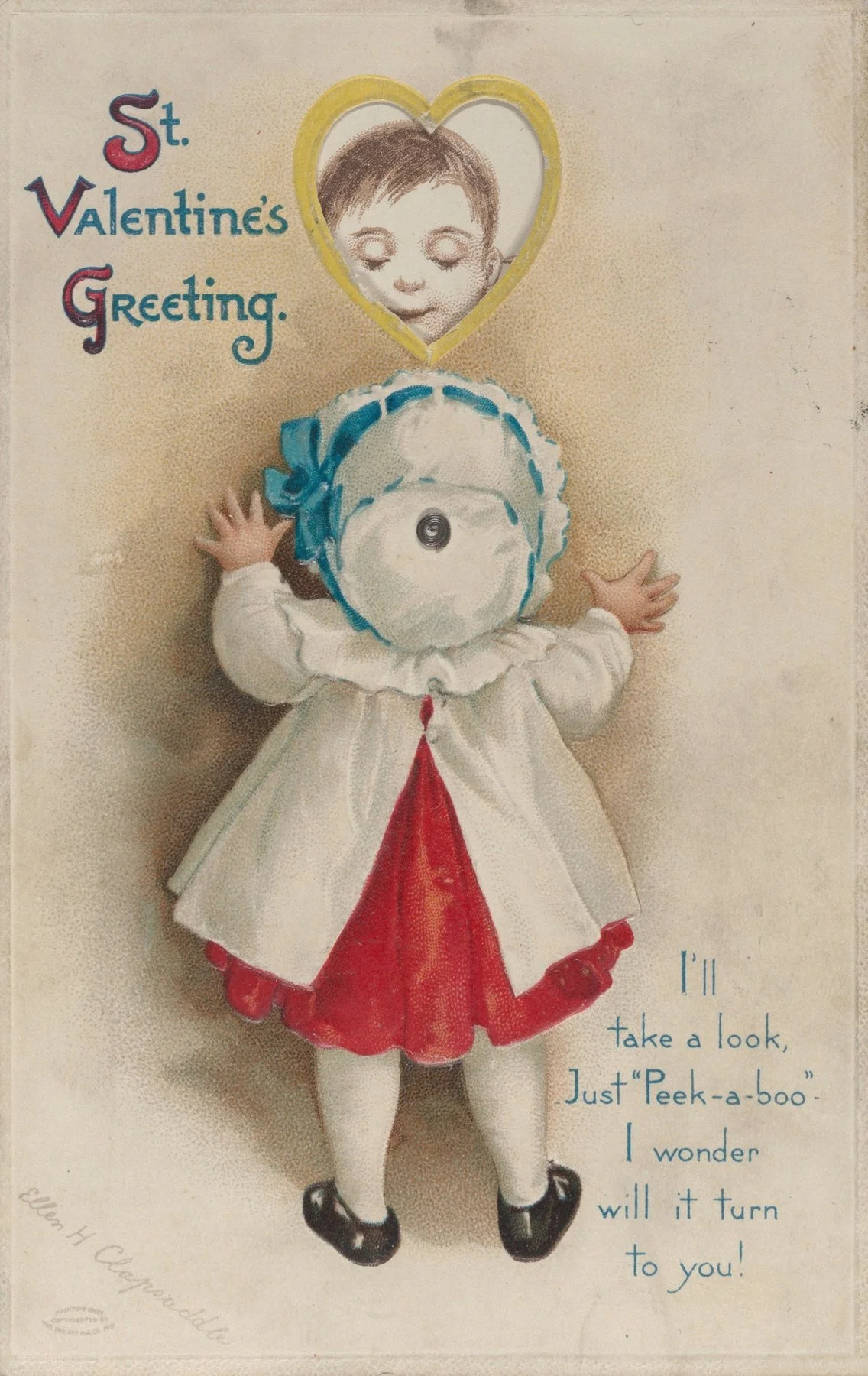
St. Valentine’s Greeting
I’ll take a look
Just Peek-a-Boo
I wonder will it
turn to you!
Conclusion
Victorian postcards are more than charming pieces of paper—they’re miniature time capsules. Made possible by advances in printing, cherished by their senders and recipients, and treasured today for their beauty and sentiment, they remind us that even the smallest objects can carry great meaning.
So whether you’re mailing a card, making a journal, or just collecting for the love of history, these elegant paper keepsakes are sure to inspire.
a few books of vintage postcard ephemera, available on Amazon.
Vintage Easter Postcards >
This book gathers together carefully restored artwork from the late 19th and early 20th centuries, offering a beautiful glimpse into the history of Easter postcards and antique holiday ephemera. View Digital Version >
Vintage Halloween Postcards: A Book of Antique Greetings and Spooky Ephemera >
Between the late 1800s and 1920s, these colorful greetings captured the magic of autumn nights. and the playful mystery of All Hallows’ Eve. View Digital Version >
Vintage Christmas Postcards: Our Collection of Classic Greetings and Timeless Ephemera >
Whether you’re an art lover, crafter, or collector, this collection of vintage Christmas postcards and timeless holiday ephemera is a welcome addition to your keepsakes or crafting resources. View Digital Version >
